
History students have one of the toughest academic jobs: dealing with massive amounts of information from different time periods, sources, and interpretations. From ancient civilizations to modern political movements, everything requires careful reading, comparison, and analysis.
In 2026, things have become easier thanks to AI research assistants for history students that help you search archives, summarize documents, and even connect historical events across timelines.
Instead of spending hours stuck in old textbooks or scattered PDFs, students now use smart AI tools to speed up research and improve accuracy. Platforms like bizmetech.site are also helping students discover these tools in a simple and practical way.
Let’s break down the best AI tools and how you can actually use them in your history assignments.
Why History Students Need AI Research Assistants
Unlike other subjects, history is not just about memorizing facts. It’s about:
- Understanding context
- Comparing different sources
- Analyzing interpretations
- Building arguments from evidence
That’s a lot to handle manually.
Here’s why AI tools are becoming essential:
- Faster access to historical sources
- Summarization of long academic texts
- Better organization of timelines
- Improved citation tracking
- Reduced reading overload
Basically, AI helps you focus more on thinking and less on digging through endless material.
What Makes a Good AI Research Assistant for History?
Before jumping into tools, here’s what actually matters:
- Ability to process academic texts and archives
- Strong summarization features
- Support for citations and references
- Contextual understanding of events
- Easy-to-use interface for students
A tool that just “summarizes” isn’t enough. History requires depth and accuracy.
Best AI Research Assistants for History Students (2026)
Let’s look at the top tools that students are using right now.
1. Perplexity AI
Perplexity AI
Perplexity AI has become one of the most popular AI research assistants for students in 2026.
Key features:
- Provides real-time answers with citations
- Summarizes historical topics quickly
- Pulls information from trusted academic sources
- Simple explanation of complex events
Best for: Quick historical overviews and essay research
For example, if you search “Causes of World War 1,” it gives you structured, cited explanations in seconds.
2. Elicit AI
Elicit
Elicit AI is powerful when it comes to academic-level historical research.
Key features:
- Finds scholarly papers on historical topics
- Summarizes research findings
- Extracts key arguments and evidence
- Organizes data into tables
Best for: University-level history essays and research papers
If you’re working on deep topics like colonial history or political revolutions, this tool is a lifesaver.
3. Google NotebookLM
NotebookLM
NotebookLM is extremely useful for students who work with multiple notes and PDFs.
Key features:
- Upload lecture notes and historical documents
- Ask questions directly from your materials
- Summarize long chapters instantly
- Build structured study notes
Best for: Organizing history notes and assignment preparation
Instead of flipping through 200 pages, you just ask questions like:
“Summarize key causes of the French Revolution”
4. ResearchRabbit
ResearchRabbit
ResearchRabbit is perfect for exploring connections between historical research papers.
Key features:
- Visual maps of academic papers
- Discovery of related research
- Author tracking and citation networks
- Helps find hidden connections in history topics
Best for: Advanced history research and thesis work
It’s especially useful when you’re trying to understand how historians interpret the same event differently.
5. Scite Assistant
Scite
Scite helps you evaluate how trustworthy a historical source really is.
Key features:
- Shows how papers are cited (supporting or contradicting)
- Helps verify academic arguments
- Improves source credibility
- Filters unreliable claims
Best for: Academic writing and source verification
In history, where interpretations vary a lot, this tool is very helpful.
Step-by-Step Guide: Using AI for History Research
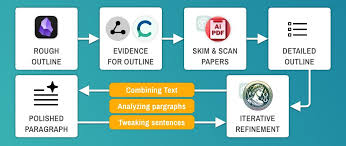
Here’s a simple workflow you can follow for assignments or exams.
Step 1: Define Your Historical Topic
Be specific:
- “Cold War causes”
- “Mughal Empire administration”
- “French Revolution impact on Europe”
Clear topics make research easier.
Step 2: Use AI for Initial Research
Start with Perplexity AI or Elicit AI:
- Get summaries
- Identify key events
- Collect academic references
Step 3: Organize Notes Using NotebookLM
Upload your materials:
- PDFs
- Lecture notes
- Articles
Then ask:
- “Explain this in simple terms”
- “List key events in chronological order”
Step 4: Explore Connections
Use ResearchRabbit to:
- Find related historical studies
- Understand different historians’ viewpoints
- Build a research map
Step 5: Verify Sources
Use Scite to:
- Check reliability
- Compare academic arguments
- Filter weak or unsupported claims
Step 6: Write Your Assignment
Now combine everything:
- Structure your essay
- Add evidence
- Build arguments
AI helps, but your analysis is what matters most.
Comparison Table: Best AI Research Assistants for History Students
| Tool | Main Strength | Best Use Case | Ease of Use |
|---|---|---|---|
| Perplexity AI | Fast answers with citations | Quick research & summaries | Very Easy |
| Elicit AI | Academic paper analysis | University essays | Medium |
| NotebookLM | Document organization | Notes & study prep | Easy |
| ResearchRabbit | Visual research mapping | Thesis & deep research | Medium |
| Scite | Citation verification | Academic credibility | Medium |
Common Mistakes History Students Make
Even with AI, students sometimes struggle:
- Copy-pasting AI summaries without understanding
- Ignoring primary sources
- Not checking historical accuracy
- Mixing timelines incorrectly
And sometimes, students rush the research proccess, which leads to weak arguments.
Remember, AI is helpful—but history still needs your thinking.
Pro Tips for Better History Research
Here are some practical tips:
- Always cross-check facts from multiple tools
- Focus on primary sources when possible
- Build timelines before writing essays
- Use AI to understand, not just summarize
- Rewrite everything in your own words
A small trick: ask AI “What are different historian opinions on this?”—it gives deeper insight.
Why This Matters in 2026
In 2026, history research is becoming more digital and AI-assisted. Universities expect students to:
- Use digital archives
- Understand research tools
- Work with AI responsibly
So learning how to use AI research assistants for history students is now a real academic skill—not just a shortcut.
And yes, resources like bizmetech.site are helping students stay updated with these modern learning tools in a simple way.