
In 2026, psychology is no longer just about theories and case studies—it’s heavily driven by data analysis. Whether you’re working on surveys, experiments, or thesis research, understanding data has become a core skill for psychology students.
The problem? Data analysis can feel overwhelming.
That’s where AI tools for psychology students come in. These tools simplify complex statistics, automate calculations, and help you interpret results without needing to be a coding expert.
In this guide, we’ll explore the best AI tools for psychology students for data analysis, how they work, and how you can use them effectively. Platforms like bizmetech.site are also helping students understand these tools in a simple and practical way.
Why Data Analysis is Challenging for Psychology Students
Psychology students often struggle with:
- Statistical methods (like regression, ANOVA)
- Interpreting results correctly
- Using complex software like SPSS
- Managing large datasets
Traditional analysis methods can be:
- Time-consuming
- Difficult to understand
- Error-prone
AI tools help by:
- Automating calculations
- Explaining statistical results
- Visualizing data clearly
- Reducing manual work
What Makes a Good AI Data Analysis Tool?
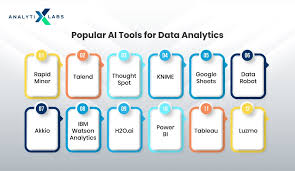
Before choosing tools, students should look for:
- Ease of use (no heavy coding required)
- Statistical analysis support
- Data visualization features
- Clear explanations of results
- Compatibility with research workflows
A good AI tool should not just analyze data—it should help you understand it.
Best AI Tools for Psychology Data Analysis (2026)
Let’s explore the top tools students are using.
1. SPSS – Best Traditional Tool with AI Enhancements
SPSS is widely used in psychology research and now includes AI-assisted features.
Key Features:
- Statistical tests (t-test, ANOVA, regression)
- Data management tools
- AI-assisted insights
- Easy-to-use interface
Best for: Academic research and thesis work
It’s still the standard tool for psychology students.
2. JASP – Best Free Alternative to SPSS
JASP is a powerful open-source tool designed for statistical analysis.
Key Features:
- Free and open-source
- Bayesian and frequentist analysis
- Easy interface for beginners
- Visual output
Best for: Students who want a free but powerful tool
It’s simple but very effective.
3. RStudio – Best for Advanced Data Analysis
RStudio is used for advanced statistical computing and research.
Key Features:
- Advanced statistical modeling
- Data visualization
- Machine learning integration
- Custom analysis
Best for: Students interested in research or data science
It’s powerful, but has a learning curve.
4. Tableau – Best for Data Visualization
Tableau helps students turn raw data into clear visual insights.
Key Features:
- Interactive charts and graphs
- Dashboard creation
- Trend analysis
- Easy drag-and-drop interface
Best for: Presenting research findings visually
It makes your data look professional and easy to understand.
5. ChatGPT – Best AI Assistant for Data Interpretation
ChatGPT is extremely useful for understanding data results.
Key Features:
- Explains statistical results
- Helps interpret outputs
- Suggests research insights
- Assists with report writing
Best for: Learning and interpretation support
It’s like having a statistics tutor available anytime.
Comparison Table: AI Tools for Psychology Data Analysis
| Tool | Main Function | Difficulty | Best For |
|---|---|---|---|
| SPSS | Statistical analysis | Medium | Academic research |
| JASP | Free analysis tool | Easy | Beginners |
| RStudio | Advanced analysis | Hard | Research students |
| Tableau | Visualization | Easy | Presentations |
| ChatGPT | AI explanation | Easy | Concept learning |
Step-by-Step Guide: How Psychology Students Should Use AI for Data Analysis
Here’s a simple workflow you can follow.
Step 1: Collect and Prepare Data
- Use surveys or experiments
- Clean your dataset
- Organize variables
Step 2: Choose Analysis Tool
- Use SPSS or JASP for basic analysis
- Use RStudio for advanced research
Step 3: Run Statistical Tests
Perform:
- Descriptive statistics
- Correlation analysis
- Regression or ANOVA
Step 4: Visualize Data
Use Tableau:
- Create graphs
- Show patterns
- Highlight key results
Step 5: Interpret Results
Use ChatGPT:
- Ask for explanation of outputs
- Understand statistical meaning
- Simplify complex results
Step 6: Write Research Report
Combine:
- Results
- Visualizations
- Interpretations
Pros and Cons of AI Data Analysis Tools
Pros:
- Saves time
- Reduces calculation errors
- Improves understanding
- Makes data easier to interpret
Cons:
- Some tools are complex
- Requires practice
- Over-reliance can reduce learning
Still, these tools are extremely valuable for psychology students.
Common Mistakes Students Make
Even with AI tools, students often:
- Use wrong statistical tests
- Misinterpret results
- Ignore assumptions of analysis
- Skip data cleaning
And honestly, sometimes students rush the proccess and trust AI outputs without verifying them.
That can lead to incorrect conclusions.
Why AI Matters for Psychology Students in 2026
In 2026, psychology research is becoming more data-driven. Students are expected to:
- Analyze data accurately
- Interpret results clearly
- Present findings professionally
That’s why AI tools for psychology students for data analysis are becoming essential.
Platforms like bizmetech.site are also helping students discover these tools and learn how to use them effectively in real academic work.
Which AI Tool Should You Choose?
Here’s a simple breakdown:
- If you want standard academic analysis → use SPSS
- If you want free option → use JASP
- If you want advanced research → use RStudio
- If you want visual presentation → use Tableau
- If you want concept explanation → use ChatGPT
👉 Best approach: combine multiple tools
Final Thoughts
AI has completely changed how psychology students handle data analysis in 2026.
Tools like SPSS, JASP, RStudio, Tableau, and ChatGPT are helping students:
- Analyze data faster
- Understand statistics better
- Improve research quality
- Present results effectively
But remember—AI is a support system, not a replacement for learning.
So use these tools wisely, practice regularly, and build strong statistical understanding. That’s how you succeed in psychology research 👍