
In 2026, medical education is going through a huge transformation. One of the biggest changes is how AI is helping medical students learn anatomy in a much more visual, interactive, and efficient way.
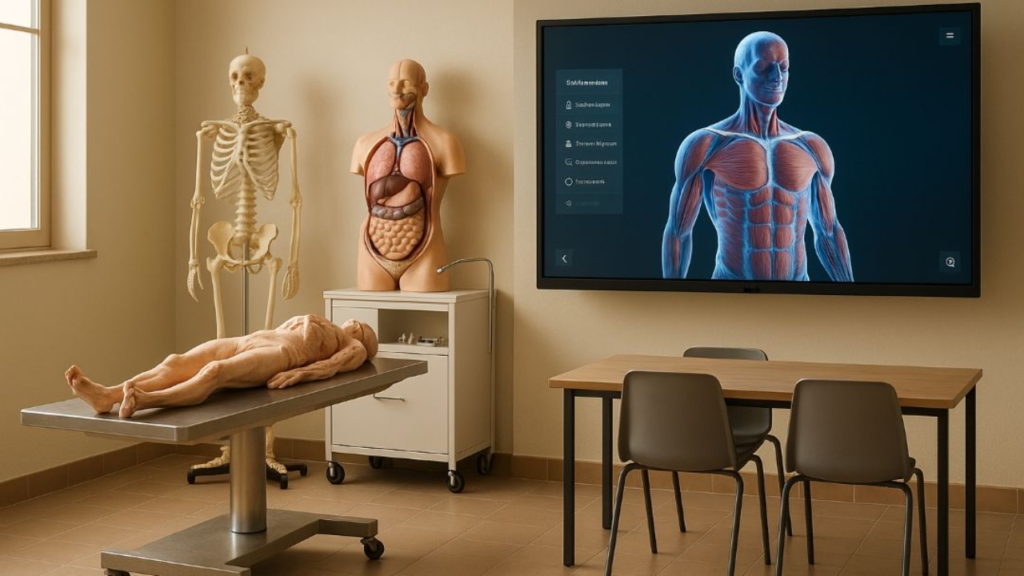
Instead of relying only on heavy textbooks and static diagrams, students now use AI-powered anatomy tools that show the human body in 3D, explain structures instantly, and even simulate real clinical scenarios.
In this guide, we’ll break down how AI is changing anatomy learning, the best tools available, and how students can use them effectively. Platforms like bizmetech.site are also helping students understand these modern learning tools in a simple and practical way.
Why Anatomy is Difficult for Medical Students
Anatomy is one of the toughest subjects in medical school because it involves:
- Memorizing thousands of structures
- Understanding spatial relationships
- Learning Latin medical terms
- Visualizing 3D body systems
Traditionally, students depended on:
- Cadaver labs
- Printed atlases
- 2D diagrams
But these methods often made learning slow and overwhelming.
Now AI is changing everything.
How AI is Transforming Anatomy Learning
AI makes anatomy learning:
- More visual
- More interactive
- Easier to understand
- Faster to revise
Instead of memorizing blindly, students can now:
- Rotate 3D human models
- Zoom into organs
- See real-time labels
- Ask AI for explanations
Basically, AI acts like a personal anatomy tutor available 24/7.
Key Ways AI Helps Medical Students Learn Anatomy
Let’s break it down into real benefits:
1. 3D Visualization of Human Body
AI tools allow students to:
- Rotate full human models
- Zoom into organs and tissues
- View systems layer by layer
This makes spatial understanding much easier compared to flat diagrams.
2. Instant Explanations
Instead of searching textbooks, students can ask AI:
- “Explain the function of the liver”
- “Show blood supply of heart”
And get simple explanations instantly.
3. Personalized Learning
AI adapts to students by:
- Identifying weak topics
- Suggesting revision areas
- Creating quizzes
4. Smart Memory Retention
AI tools often include:
- Flashcards
- Spaced repetition systems
- Active recall tests
This helps students remember anatomy long-term.
5. Virtual Dissection Practice
Some advanced tools simulate:
- Dissection steps
- Organ separation
- Layer-by-layer anatomy exploration
This is especially useful when cadaver labs are limited.
Best AI Tools for Learning Anatomy (2026)
Now let’s explore the most useful tools medical students are using today.
1. Complete Anatomy – Best AI 3D Anatomy Platform
Complete Anatomy is one of the most advanced anatomy learning tools.
Key Features:
- Full 3D human body model
- Layer-by-layer anatomy viewing
- AI-powered learning guides
- Interactive quizzes
Best for: Medical students who want deep anatomical understanding
It feels like having a virtual cadaver lab in your laptop.
2. Visible Body – Best Visual Learning Tool
Visible Body is widely used for interactive anatomy visualization.
Key Features:
- High-quality 3D models
- Organ system breakdown
- Medical animations
- Study modules
Best for: Students who prefer visual learning
It makes complex structures easy to understand.
3. TeachMe Anatomy – Best for Concept Learning
TeachMe Anatomy focuses on clear explanations and structured learning.
Key Features:
- Detailed anatomy explanations
- Clinical relevance notes
- Quick revision summaries
- Mobile-friendly interface
Best for: Exam preparation and revision
4. ChatGPT – Best AI Study Assistant
ChatGPT helps students understand anatomy concepts in simple language.
Key Features:
- Explains complex anatomy topics
- Creates quizzes and flashcards
- Answers student questions
- Helps with exam preparation
Best for: Quick learning and doubt solving
5. BioDigital Human – Best Interactive Human Body Simulation
BioDigital Human offers a realistic virtual body experience.
Key Features:
- Interactive human anatomy model
- Disease simulation
- System-based learning
- Educational visualization
Best for: Medical simulation learning
Comparison Table: AI Tools for Anatomy Learning
| Tool | Main Function | Strength | Best For |
|---|---|---|---|
| Complete Anatomy | 3D modeling | Very Strong | Deep learning |
| Visible Body | Visualization | Strong | Visual learners |
| TeachMe Anatomy | Theory learning | Strong | Exam prep |
| ChatGPT | AI tutoring | Very Strong | Concept understanding |
| BioDigital Human | Simulation | Strong | Clinical learning |
Step-by-Step Guide: How Medical Students Should Use AI for Anatomy
Here’s a simple workflow students can follow in 2026.
Step 1: Start with Visualization
Use Complete Anatomy or Visible Body:
- Explore organ systems
- Rotate 3D models
- Understand spatial relationships
Step 2: Learn Concepts
Use TeachMe Anatomy:
- Read structured explanations
- Focus on clinical importance
- Build strong theory base
Step 3: Ask AI Questions
Use ChatGPT:
- Clear doubts instantly
- Get simplified explanations
- Generate revision notes
Step 4: Practice Memory Recall
Use flashcards or quizzes:
- Revise daily
- Test yourself regularly
- Strengthen memory retention
Step 5: Apply Clinical Thinking
Use BioDigital Human:
- Study disease models
- Understand real-life anatomy application
Pros and Cons of AI in Anatomy Learning
Pros:
- Faster understanding of complex structures
- Better visualization
- Interactive learning experience
- Personalized study support
Cons:
- Over-reliance may reduce manual learning
- Some tools require premium access
- Requires consistent internet access
Still, the benefits clearly outweigh the limitations.
Common Mistakes Medical Students Make
Even with AI tools, students often:
- Rely only on 3D models without theory
- Skip textbook reading completely
- Don’t revise regularly
- Use AI without active recall
And honestly, sometimes students rush the proccess and think watching 3D models once is enough to memorize everything.
That’s not how anatomy works.
Why AI Matters in Medical Education (2026)
In 2026, medical education is becoming highly digital. Students are expected to:
- Understand complex anatomy visually
- Learn faster with digital tools
- Apply knowledge in clinical settings
That’s why AI is helping medical students learn anatomy more effectively than ever before.
Platforms like bizmetech.site are also helping students explore these tools and use them properly in real academic learning.
Which AI Tool Should You Choose?
Here’s a simple breakdown:
- If you want advanced 3D learning → use Complete Anatomy
- If you want visual explanations → use Visible Body
- If you want exam revision → use TeachMe Anatomy
- If you want AI tutoring → use ChatGPT
- If you want clinical simulation → use BioDigital Human
👉 Best approach: combine multiple tools together
Final Thoughts
AI has completely transformed anatomy learning in 2026.
Tools like Complete Anatomy, Visible Body, TeachMe Anatomy, ChatGPT, and BioDigital Human are helping medical students:
- Understand anatomy faster
- Visualize structures clearly
- Improve exam performance
- Build clinical understanding
But remember—AI is a support system, not a replacement for hard study.
So use it wisely, revise regularly, and stay consistent. That’s how you truly master anatomy 👍